
Spatial Commerce Is Reshaping Home Retail
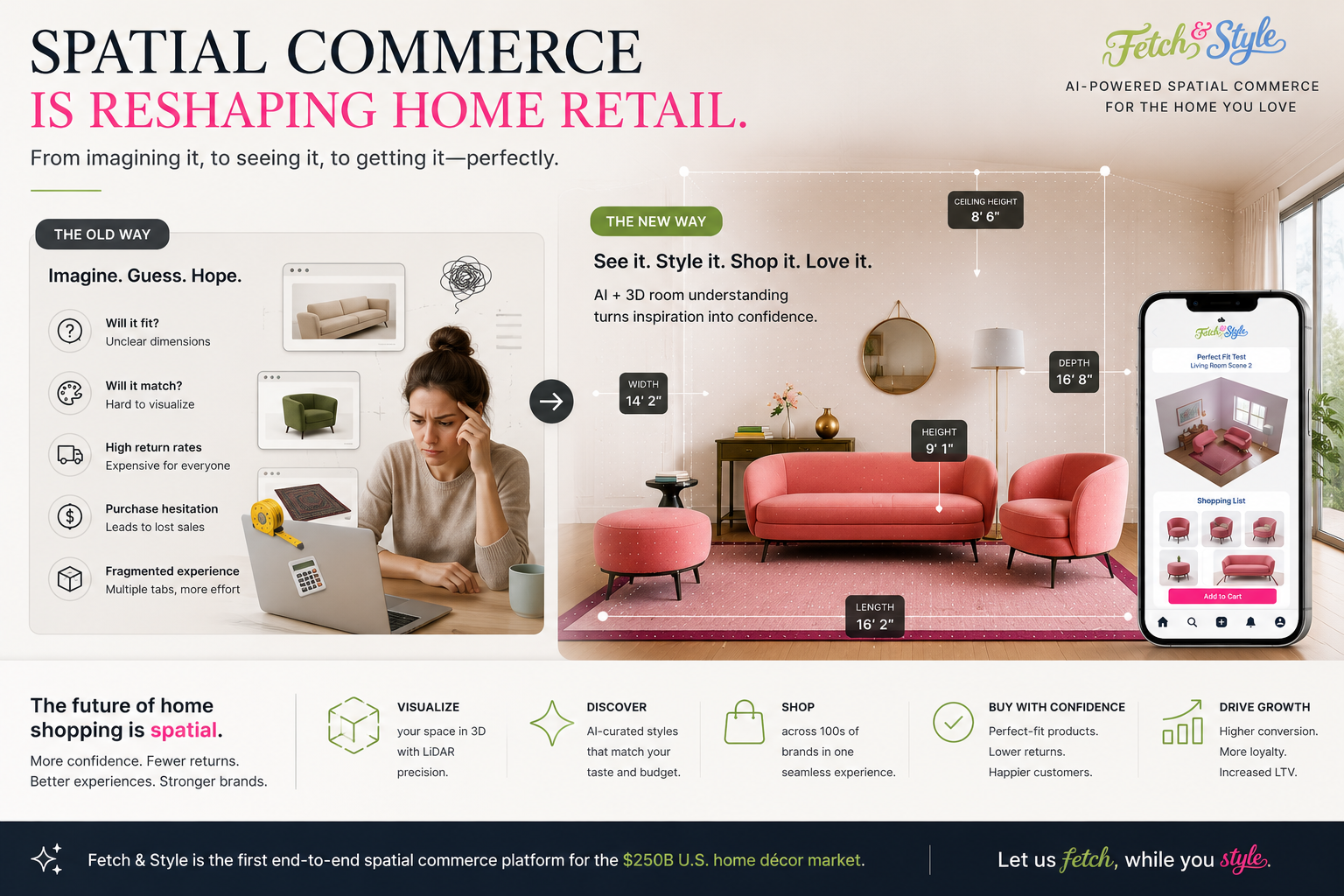
Consumers Don’t Want More Products. They Want Confidence.
For decades, home décor ecommerce has relied on a flawed assumption:
That consumers can confidently buy furniture and décor from flat product pages.
They can’t.
A sofa is not a T-shirt.
A dining table is not a phone charger.
Home products are deeply spatial, emotional, and contextual. Consumers need to know:
Will it fit?
Will it match?
Will it feel right in my space?
Traditional ecommerce has struggled to answer those questions — creating friction, hesitation, abandoned carts, and expensive return cycles across the industry.
Now, a new category is emerging to solve this problem:
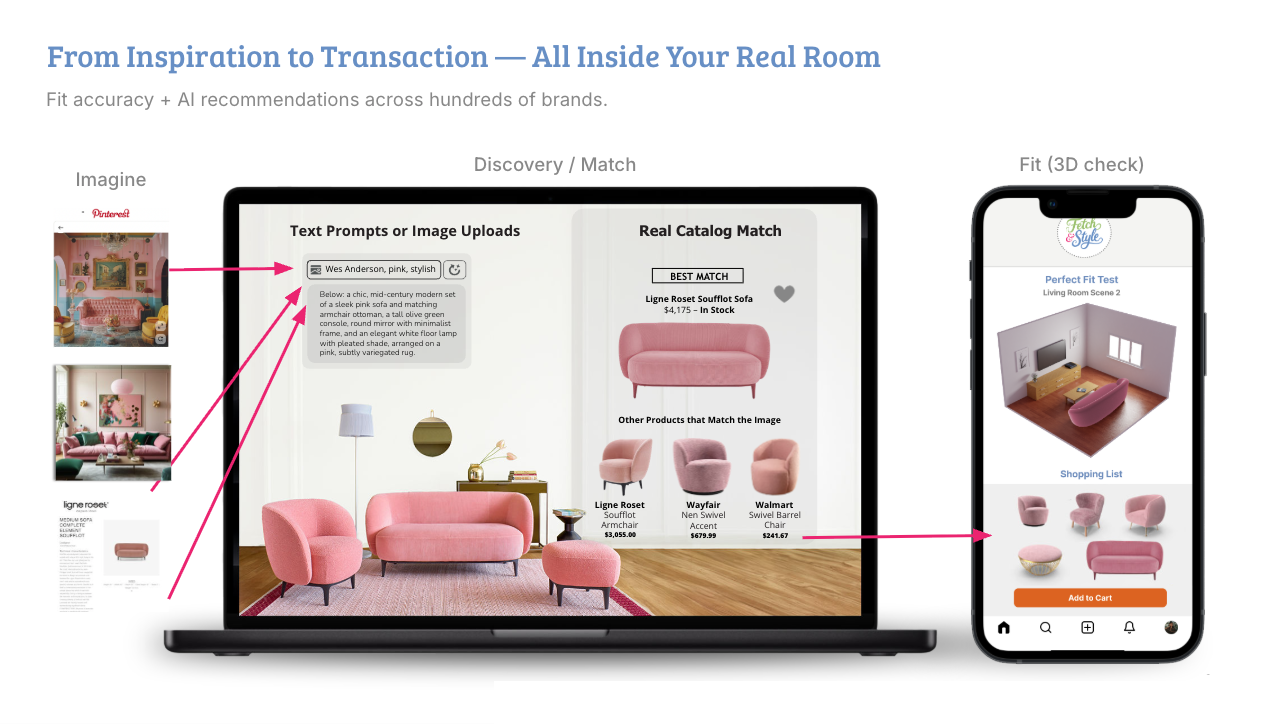
Spatial Commerce
Spatial commerce transforms shopping from static browsing into contextual, immersive decision-making.
Instead of shopping through disconnected tabs, measurements, and imagination, consumers interact with products directly inside a digital understanding of their own space.
This shift changes everything.
Consumers no longer shop for products alone.
They shop for outcomes.
Not:
“Buy this chair.”
But:
“Show me the perfect chair for this room, my style, my budget, and my layout.”
That is the future of commerce.
And the home décor industry is becoming the proving ground.
Why Traditional Home Retail Is Breaking
The modern home shopper faces overwhelming complexity:
• Thousands of fragmented retailers
• Endless style combinations
• Unclear dimensions
• Poor visualization tools
• Limited personalization
• High return friction
As a result, consumers hesitate before purchasing large-ticket home items. Many abandon the process entirely.
Retailers absorb the consequences:
• Rising customer acquisition costs
• Lower conversion rates
• Increased return expenses
• Margin pressure
• Weak customer loyalty
Meanwhile, online furniture returns remain among the most expensive in ecommerce due to logistics, damage risk, and restocking costs.
The industry doesn’t simply need better ecommerce.
It needs a new interface for decision-making.
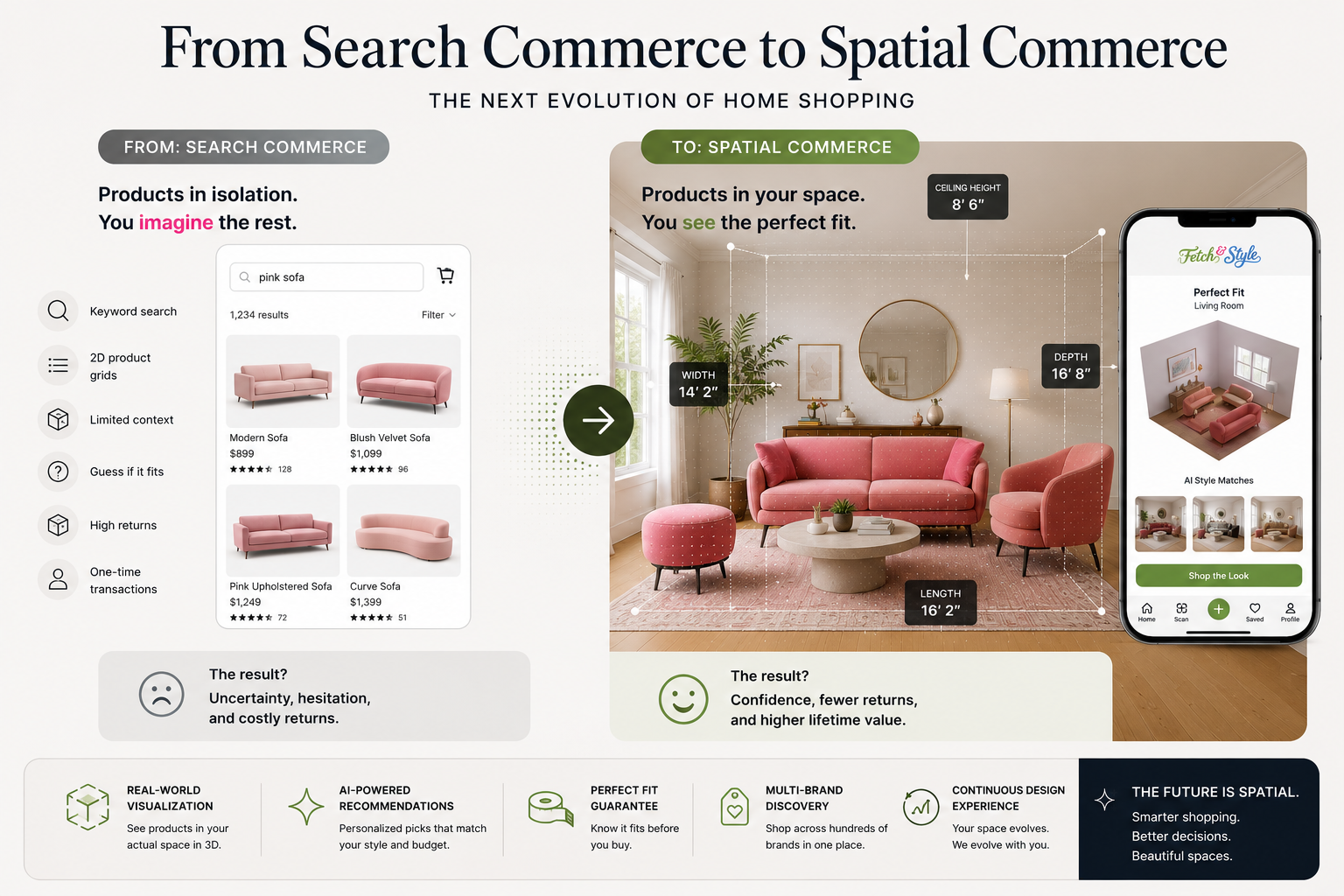
From Search Commerce to Spatial Commerce
The first era of ecommerce was search-driven.
Consumers typed keywords.
Platforms returned products.
But AI is rapidly changing discovery behavior.
Consumers increasingly expect systems to understand intent, context, taste, and environment.
Spatial commerce combines several technologies into a unified experience:
LiDAR room scanning
Computer vision
Generative AI
Real-time catalog aggregation
3D room mapping
Personalization engines
AI shopping agents
Together, these technologies create what amounts to a “digital twin” of the consumer’s home.
Once the room itself becomes data, commerce becomes dramatically smarter.
A platform can understand:
Dimensions
Layout flow
Existing furniture
Style preferences
Lighting conditions
Budget patterns
Purchase intent
This transforms product recommendations from generic to contextual.
From static catalogs to intelligent environments.
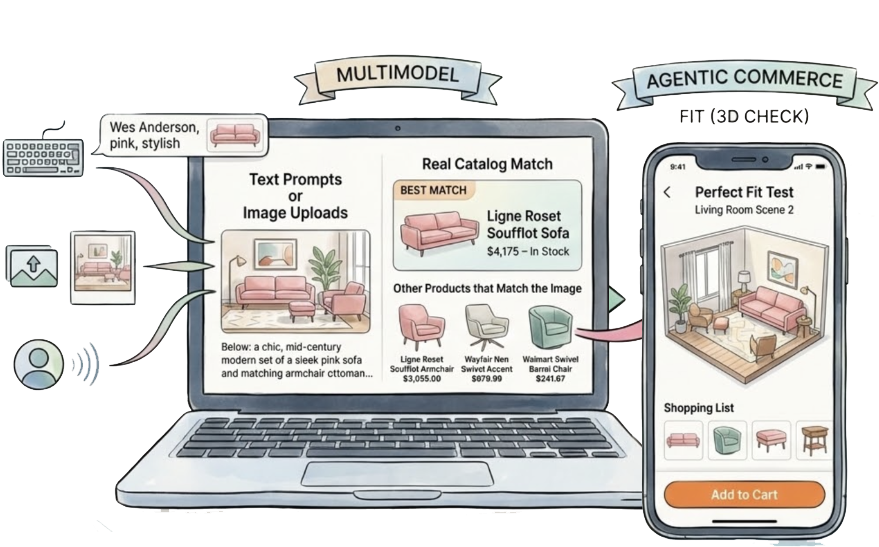
The Rise of AI Shopping Agents
The next major shift in retail will not just be AI recommendations.
It will be AI shopping agents.
These systems continuously learn from user behavior, saved products, room scans, and evolving preferences to proactively assist consumers over time.
Imagine:
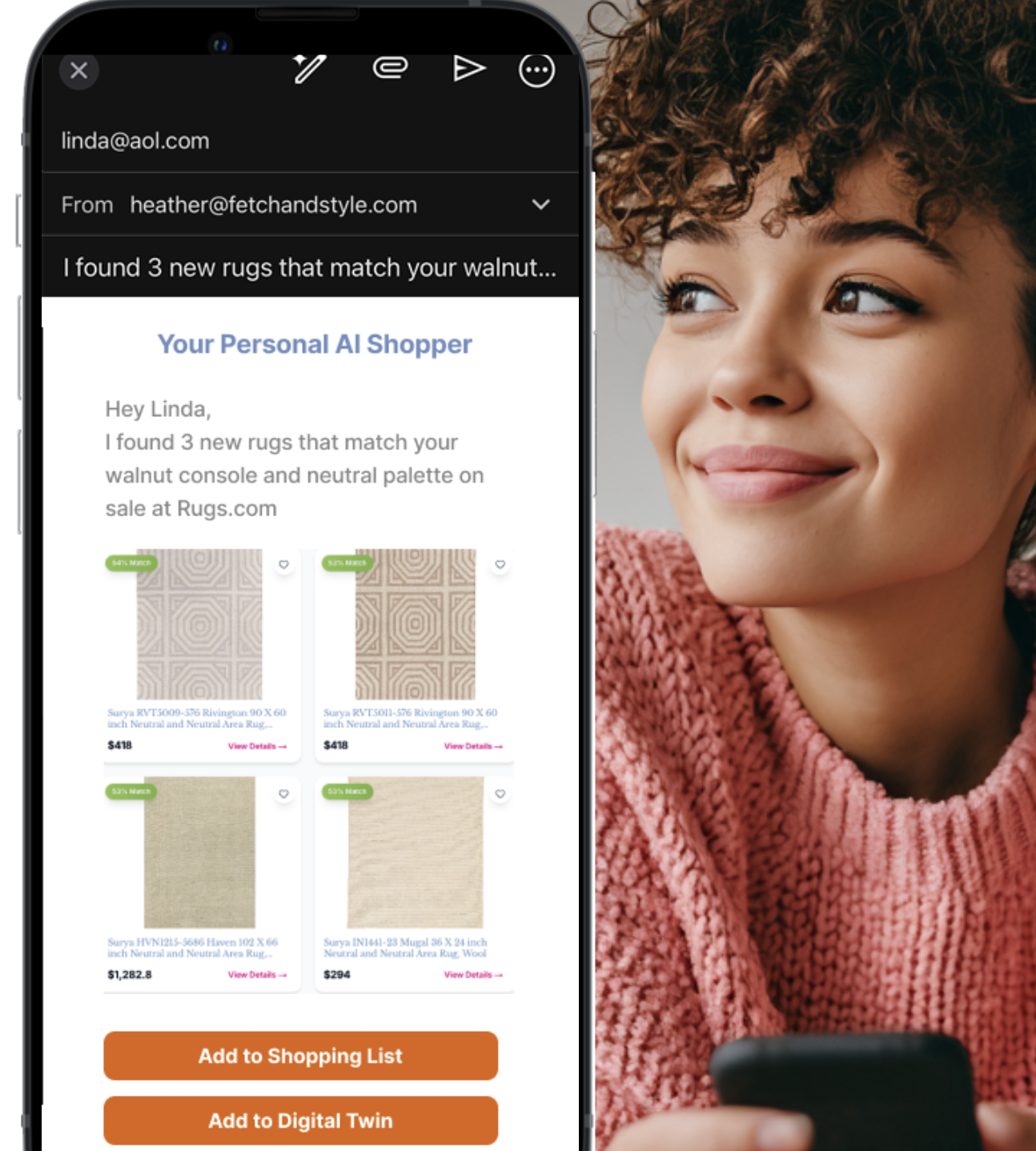
A rug price drops and your AI alerts you
A new lamp collection matches your room aesthetic
A sectional becomes available in the perfect dimensions
Seasonal styling recommendations appear automatically
Commerce becomes persistent rather than transactional.
The shopping experience evolves from occasional browsing into continuous design.
This dramatically increases engagement, lifetime value, and consumer trust.
Why Home Décor Is the Perfect Category for Spatial Commerce
Few industries are as dependent on visualization as home retail.
Furniture and décor purchasing is driven by:
• Scale
• Style harmony
• Fit testing
• Emotional confidence
• Room cohesion
Consumers are not simply buying products.
They are building identities and environments.
That makes home décor uniquely positioned for immersive AI-driven commerce experiences.
The companies that win this next era will not be those with the largest catalogs.
They will be the ones that best understand context.
The Future Is Multi-Brand, Personalized, and Spatial
Most current retail ecosystems remain closed environments.
Consumers are forced to browse within a single retailer’s catalog, limiting discovery and personalization.
The next generation of platforms will aggregate across brands, price points, and styles while using AI to curate intelligently for each user.
This creates a fundamentally different commerce model:
• Open ecosystems instead of walled gardens
• Intelligent recommendations instead of keyword filtering
• Real-room visualization instead of isolated products
• Confidence-driven purchasing instead of guesswork
Spatial commerce doesn’t replace ecommerce.
It evolves it.
The Retailers That Adapt Will Lead the Next Decade

The shift toward AI-native shopping is already underway.
Consumers are rapidly adopting AI tools for discovery, inspiration, and purchasing decisions. The expectations for personalization and contextual intelligence are rising across every category.
Home retail is no exception.
The brands that embrace spatial commerce early will gain major advantages:
Higher conversion rates
Lower return costs
Stronger customer loyalty
Better personalization
More valuable first-party data
Increased engagement over time
This is not simply a UX trend.
It is a structural shift in how people will shop.
The future storefront is not a webpage.
It is an intelligent spatial experience.
And we are only at the beginning.
See how your catalog scores.
Run Your Free Audit: AI Commerce Readiness Score
Book a Strategy Call: Fetch & Style
