
Why Most Furniture Catalogs Will Fail in AI Search
The ecommerce industry is entering a major shift.
For years, online retailers optimized their websites primarily for traditional search engines and manual browsing. Product catalogs were designed for humans scrolling category pages — not for AI systems trying to understand products contextually.
That model is rapidly changing.
Platforms like ChatGPT, Claude, Perplexity, and emerging AI shopping agents are introducing a new commerce layer powered by conversational search, multimodal discovery, and intelligent product recommendations.
Consumers are no longer just typing:
“modern sofa”
They’re asking:
“Show me a warm minimalist sofa for a small apartment with durable fabric and neutral tones.”
This fundamentally changes how products need to be structured online.
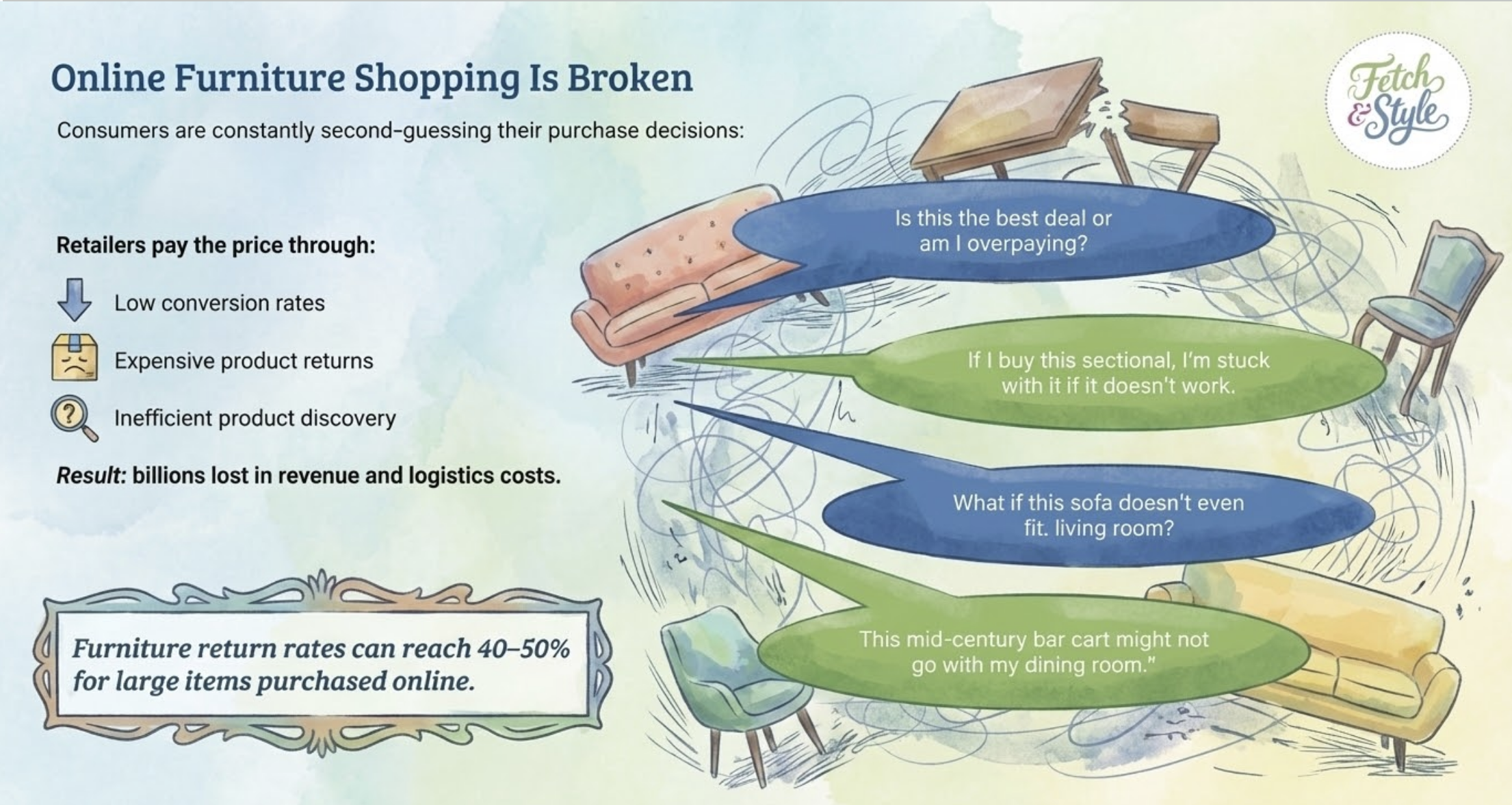
Most Furniture Catalogs Were Never Built for AI
The majority of furniture and home décor catalogs still rely on:
Generic product titles
Inconsistent metadata
Missing dimensions
Weak material descriptions
Flat taxonomy structures
Poor semantic tagging
Limited contextual intelligence
Traditional ecommerce platforms can still function with this data.
AI systems cannot.
AI-powered discovery engines require structured, machine-readable product intelligence to understand:
style
room compatibility
dimensions
materials
design intent
visual relationships
semantic context
Without this information, products become increasingly difficult for AI systems to recommend accurately.
SEO Is Evolving Into AI Discoverability
Traditional SEO focused on keywords and rankings.
The next generation of commerce is centered around AI discoverability:
Can intelligent systems understand your catalog well enough to surface your products in conversational and visual search experiences?
This is becoming one of the most important competitive advantages in ecommerce.
Brands with enriched, AI-readable catalogs will likely gain:
Greater visibility in AI search
Stronger recommendation placement
Improved personalization
Higher-quality traffic
Better conversion efficiency
Meanwhile, brands with weak product data risk becoming invisible inside AI-powered shopping environments.
Introducing the AI Commerce Readiness Score
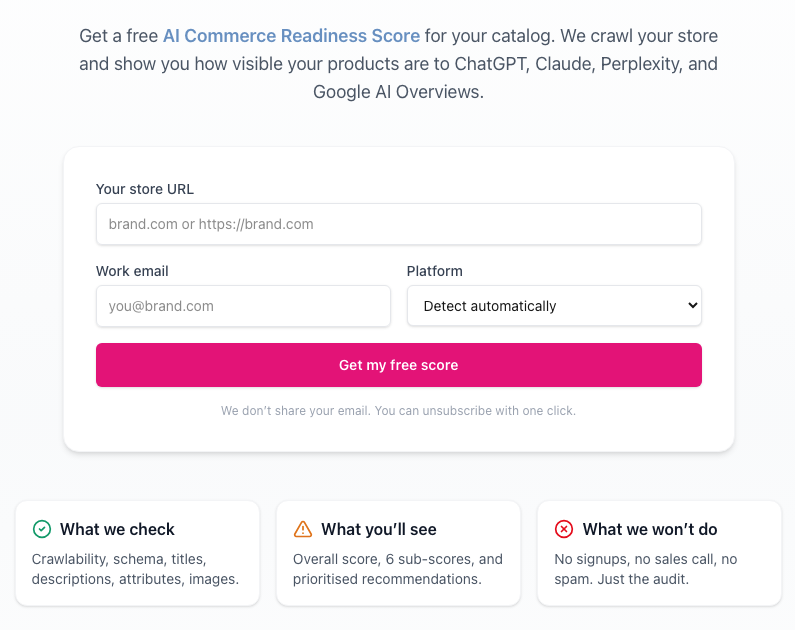
At Fetch & Style, we built the:
The tool helps brands evaluate how prepared their ecommerce catalogs are for AI-driven commerce and product discovery.
Brands can submit:
Shopify URL
SKU count
Product catalog feed
And receive:
an AI readiness score
catalog weaknesses
optimization recommendations
insights into AI discoverability opportunities
The platform evaluates areas such as:
metadata quality
semantic search readiness
AI discoverability
taxonomy structure
product enrichment
image optimization
contextual product intelligence
The goal is simple:
Help ecommerce brands prepare for the future of AI-powered shopping.
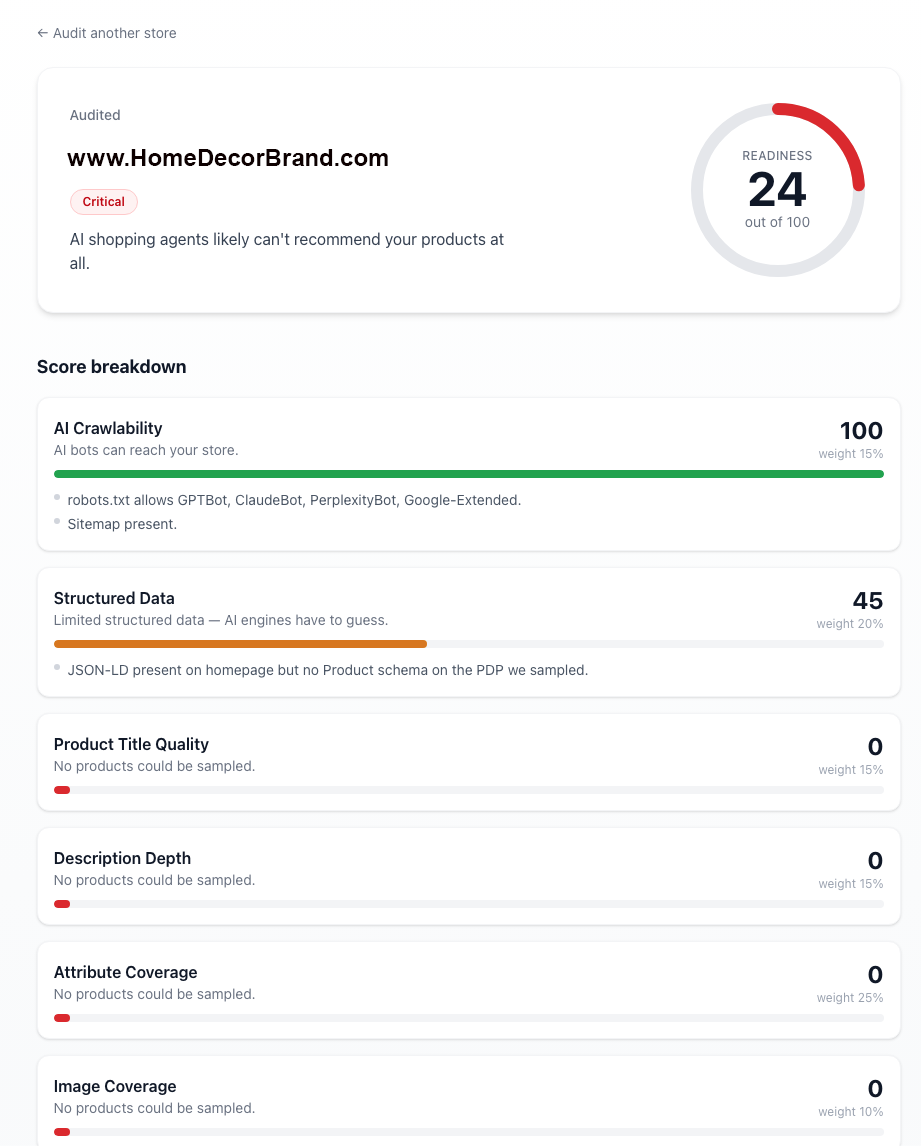
The Future of Ecommerce Infrastructure
As AI becomes a larger part of product discovery, the quality of product data will matter more than ever.
This is no longer just about websites or SEO rankings.
It’s about creating catalogs that intelligent systems can interpret, contextualize, and recommend effectively.
The next generation of ecommerce winners will not simply have the best products.
They will have the most AI-readable catalogs.
AI-driven commerce is evolving quickly. Brands that optimize their catalogs now will have a major advantage in discoverability, recommendations, and AI-powered shopping experiences.
See how your catalog scores.
Run Your Free Audit: AI Commerce Readiness Score
Book a Strategy Call: Fetch & Style
