
From Pinterest Inspiration to Shoppable Reality
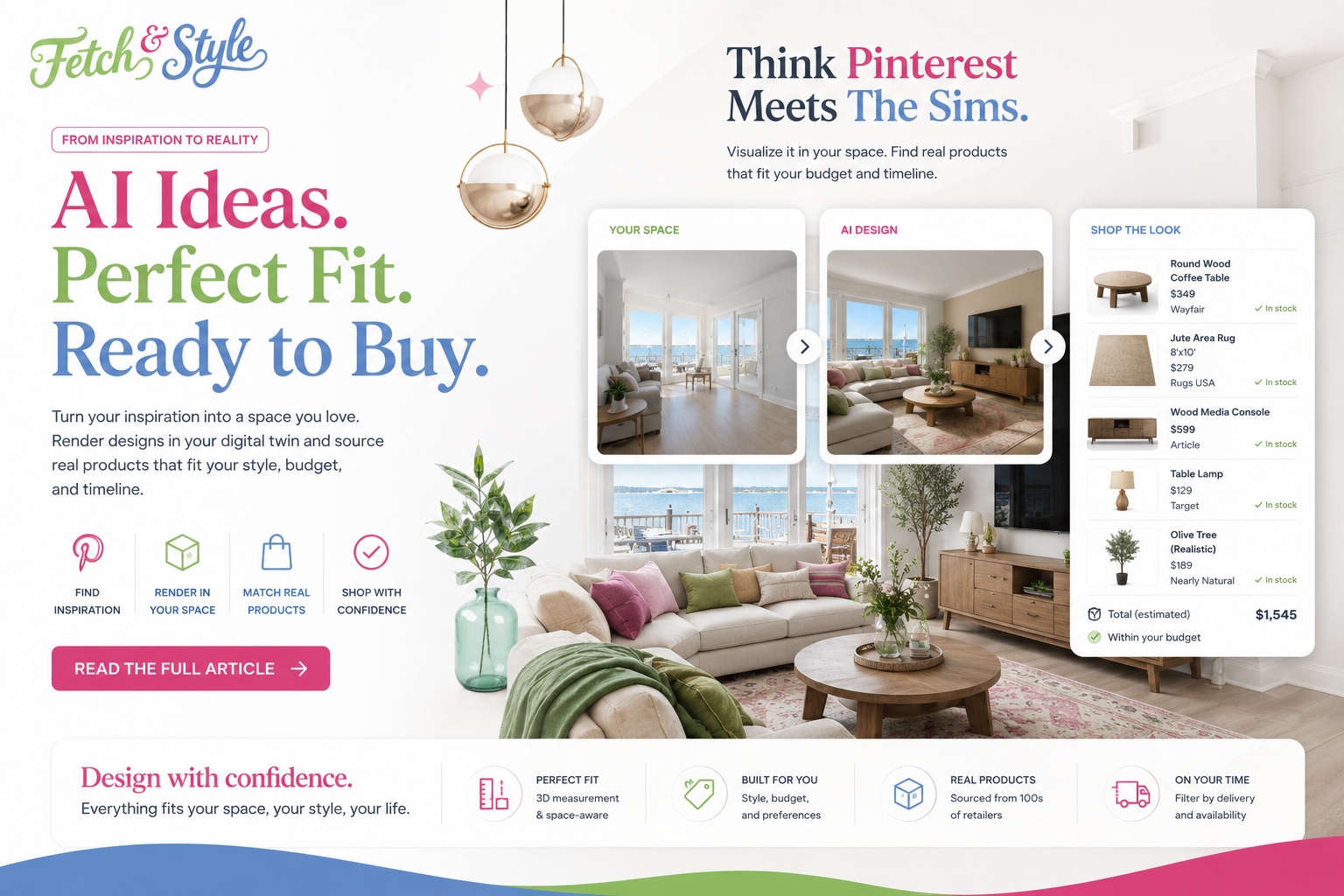
Think Pinterest Meets The Sims—But Everything Fits, Matches, and Is Ready to Buy.
Every day, millions of consumers browse Pinterest, Instagram, Facebook groups, and AI design tools searching for inspiration for their homes.
A homeowner uploads a photo of their living room and asks:
"How can I make this room feel warmer?"
Within minutes, AI generates beautiful design concepts. A larger rug appears. Warm wood tones replace sterile finishes. Layered textures, accent lighting, plants, and thoughtfully curated furniture transform the space.
The result is inspiring.
But then reality gets in the way.
Where do you buy those products?
Will they actually fit your room?
Can you afford them?
Can they be delivered before your next gathering or move?
The design looks amazing, but the path from inspiration to purchase remains fragmented.
This is the growing gap between AI-generated design and real-world commerce.
Consumers Are Already Designing with AI
The home décor industry is experiencing a fundamental shift.
Consumers no longer need professional designers to visualize possibilities. AI can generate room transformations in seconds.
What once required mood boards, consultations, and expensive design services can now be accomplished with a single image upload and a simple prompt.
Consumers are already creating the future.
They're using Pinterest to discover inspiration.
They're using AI to visualize possibilities.
They're crowdsourcing feedback from online communities.
In many ways, today's consumer behavior already resembles a combination of Pinterest and The Sims.
People are collecting ideas, experimenting with layouts, and imagining entirely new versions of their homes.
The problem isn't imagination anymore.
The problem is execution.
The Missing Layer in AI Interior Design
Today's AI tools are incredibly good at generating beautiful images.
They're far less effective at helping consumers purchase those rooms.
Most AI-generated spaces contain:
Products that don't exist
Furniture without purchasing links
Items that exceed the user's budget
Pieces that won't fit the room
Designs disconnected from inventory availability
Consumers are left doing the hard work themselves.
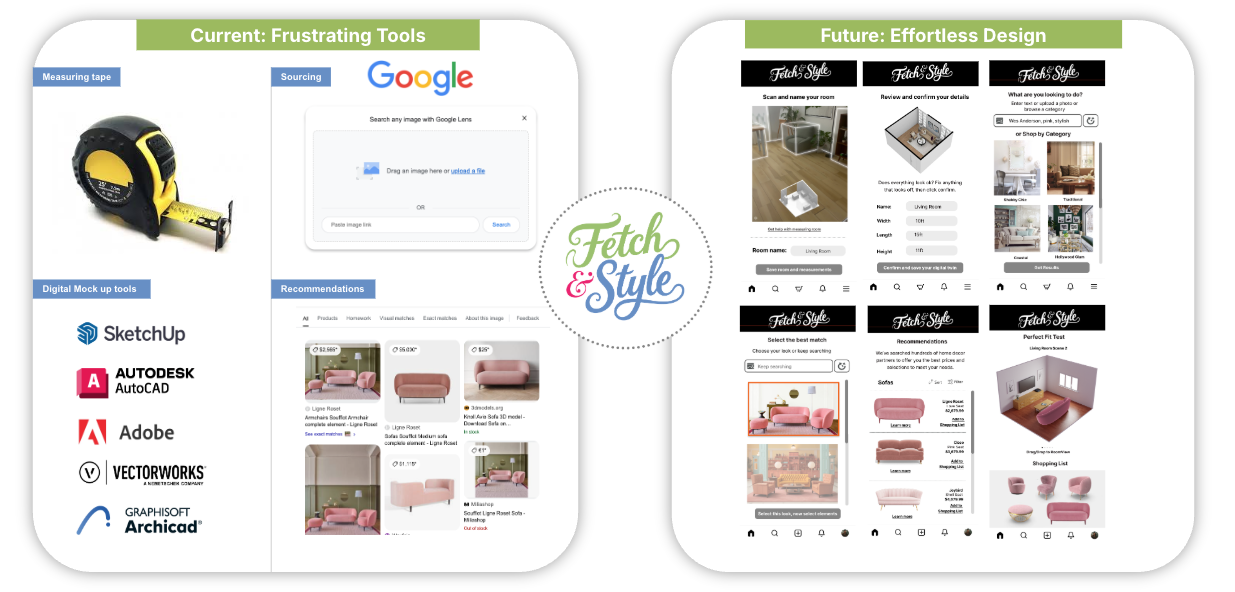
They search dozens of websites.
Compare dimensions manually.
Create spreadsheets.
Track inventory.
Calculate budgets.
And ultimately hope everything works together.
The future of AI home design isn't better image generation.
It's connecting inspiration directly to commerce.
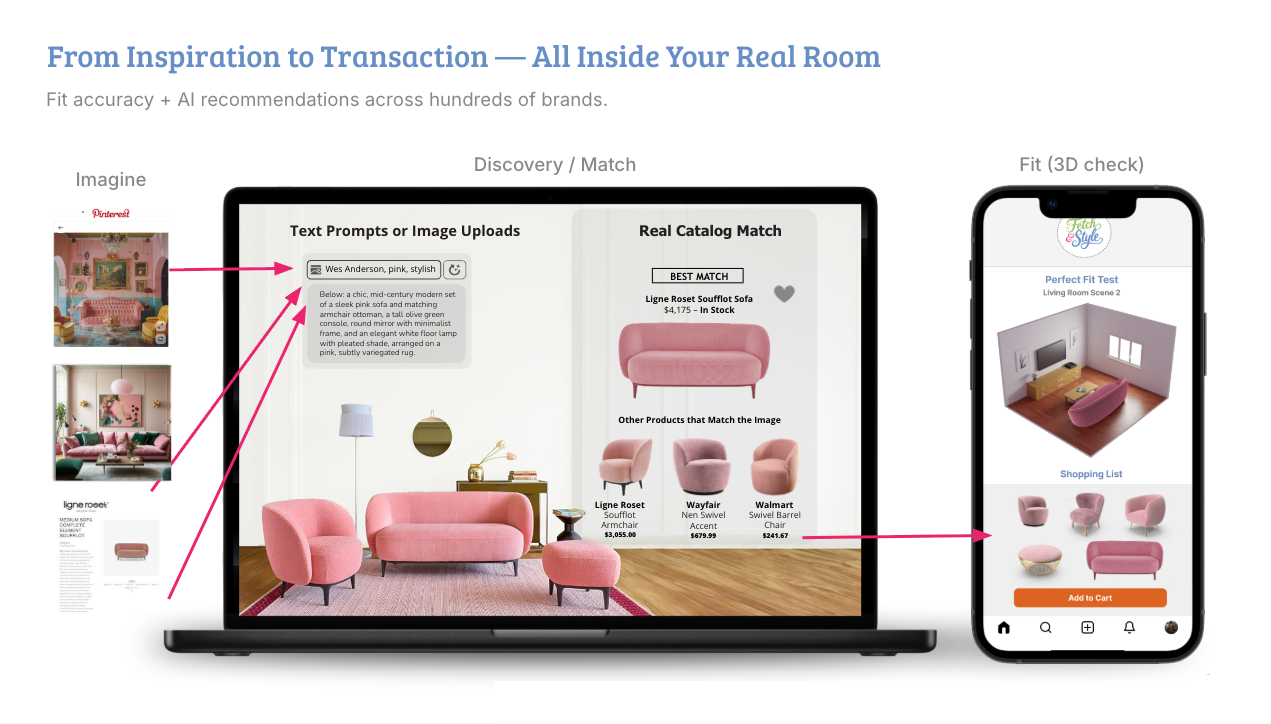
Imagine Pinterest, Your Digital Twin, and Shopping Working Together
Imagine discovering a living room on Pinterest that perfectly captures your style.
Instead of saving it to a board and forgetting about it, you instantly import that inspiration into a digital twin of your home.
The room is no longer a generic rendering.
It's your room.
Your dimensions.
Your windows.
Your furniture.
Your lifestyle.
AI then transforms the inspiration into a personalized design concept built specifically for your space.
Next, it identifies every item in the design and matches it to real products available for purchase.
Not just visually similar products.
Products that fit your room dimensions.
Products that match your budget.
Products available within your preferred delivery timeline.
Need a designer sofa look for under $2,000?
The AI finds alternatives.
Need everything delivered before Thanksgiving?
The AI filters by availability.
Want to compare luxury, mid-market, and budget versions of the same design?
The AI creates all three instantly.
This is where inspiration becomes actionable.
Why Spatial Commerce Matters
One of the biggest challenges in home décor shopping is uncertainty.
Consumers struggle with questions like:
Will this sofa fit?
Is this rug too small?
Does this style work with my existing furniture?
Will the colors match in my room?
What happens if I don't like it?
These concerns lead to delayed purchases and costly returns.
Spatial commerce changes the equation.
Instead of shopping from static product pages, consumers shop within the context of their actual homes.
Products are evaluated based on:
Room dimensions
Existing furnishings
Style preferences
Lifestyle requirements
Budget constraints
The result is greater confidence, better purchasing decisions, and fewer returns.
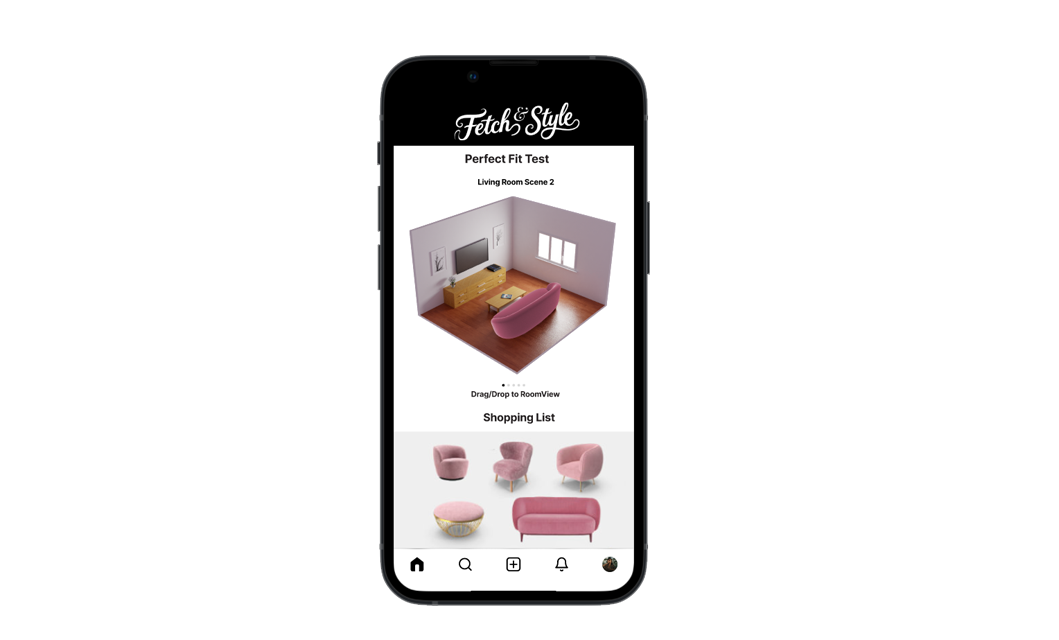
From AI Inspiration to Product Matchback
The next evolution of home commerce is product matchback.
When AI generates a room concept, consumers shouldn't be left wondering how to recreate it.
The platform should automatically:
Identify every item in the scene
Match products from real retailer catalogs
Offer multiple price-point alternatives
Verify dimensional fit
Track inventory and availability
Create a seamless path to purchase
Instead of asking, "Where can I buy that?"
Consumers can simply click and shop.
This transforms AI from an inspiration engine into a commerce engine.
The Future Is Continuous Design
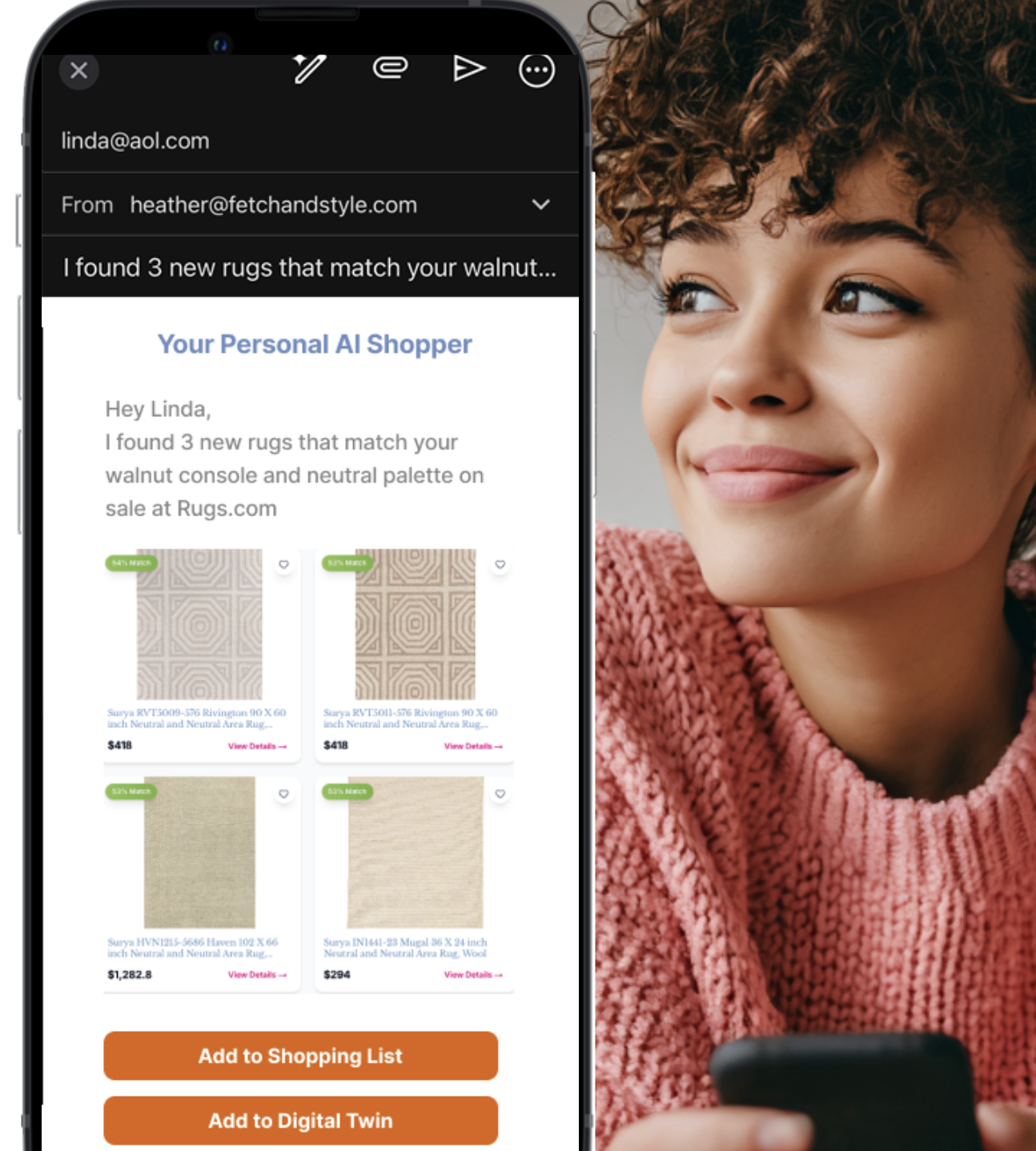
Always on personal shopper
Historically, home design happened only during major life events.
Moving.
Renovating.
Remodeling.
Today, consumers expect ongoing personalization.
Just as Spotify continuously recommends music and Netflix continuously recommends content, the home should continuously evolve.
An intelligent AI design companion can:
Monitor inventory changes
Alert users to price drops
Recommend seasonal refreshes
Suggest new products that fit existing spaces
Learn style preferences over time
Home design becomes a living, evolving experience rather than a one-time project.
The Future of Home Décor Is Spatial Commerce
The next generation of home shopping will combine inspiration, visualization, personalization, and commerce into a single experience.
Consumers will discover ideas.
Render them inside digital twins of their homes.
Receive personalized product recommendations.
Validate fit and budget.
And purchase with confidence.
Think Pinterest meets The Sims.
Add AI.
Add real products.
Add room intelligence.
Add commerce.
That's the future of home décor.
And that's the future Fetch & Style is building.
Because the goal isn't simply helping consumers imagine better spaces.
The goal is helping them bring those spaces to life.
See how your catalog scores.
Run Your Free Audit: AI Commerce Readiness Score
Book a Strategy Call: Fetch & Style
